
Blog vs Service Pages - What Goes Where and Why It Matters for SEO
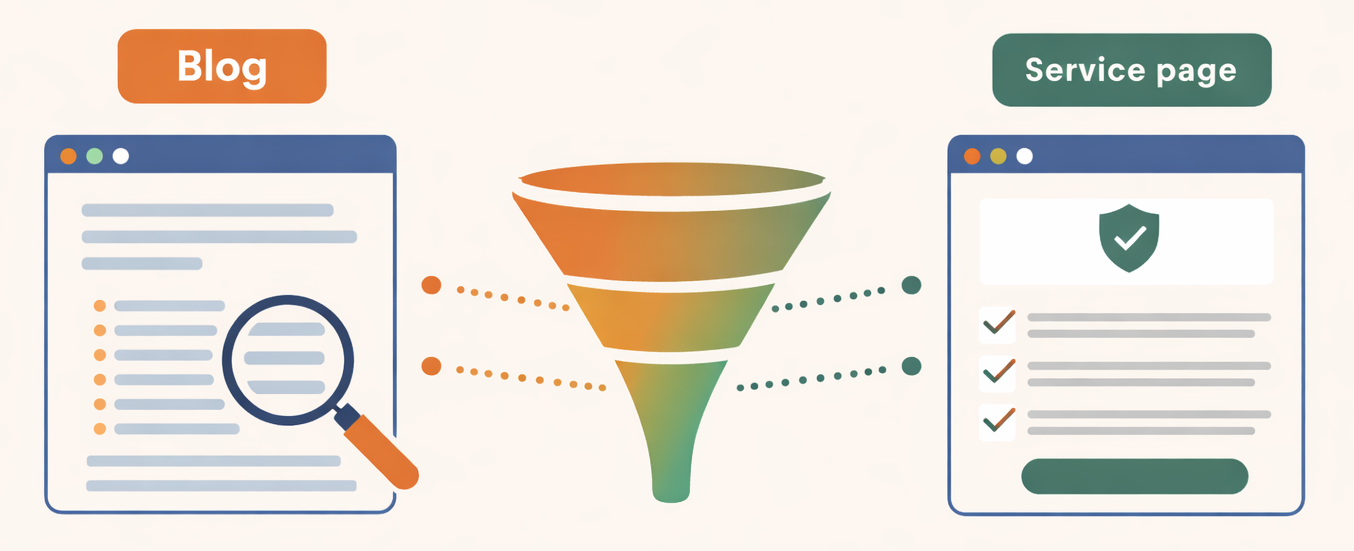
One of the most common mistakes we see in SEO audits is not bad keywords or weak backlinks. It is content placed in the wrong location. Businesses often blur the line between blog content and service pages, which confuses search engines, weakens rankings, and frustrates users.
At Tactical Boost Digital, we treat website structure like an operational plan. Every page has a role. Every role supports the mission. Blogs and service pages are not interchangeable assets. They serve different objectives, target different intent, and must be deployed correctly to win organic search.
This guide breaks down what belongs on a blog, what belongs on a service page, and why separating them properly is critical for SEO performance and conversions.
The Core Difference Between Blog Content and Service Pages
The simplest way to think about this is intent.
Service pages are built to convert. Blog posts are built to educate and attract.
A service page targets high-intent searchers who are actively looking to hire or buy. A blog post targets informational searchers who are researching, learning, or comparing options.
When those intents are mixed, neither page performs well.
Search engines want clarity. Users want clarity. Clear separation creates both.
What Service Pages Are Designed to Do
A service page exists for one reason - to win business.
It should clearly answer:
• What service you offer
• Who it is for
• What problem it solves
• Why your company is qualified
• How to take the next step
Service pages target commercial keywords like “SEO services,” “Google Ads management,” or “local SEO agency.” These keywords signal readiness to act.
Because of that, service pages must be direct, authoritative, and conversion-focused. They should not wander into long educational explanations that dilute the call to action.
Think of a service page as a briefing document. Clear, concise, and decisive.
What Blog Posts Are Designed to Do
Blog content serves a different mission.
Blogs are built to:
• Capture informational search traffic
• Answer questions prospects are asking
• Build topical authority
• Support service pages through internal relevance
• Warm up future buyers
Blog posts target long-tail, research-based queries like “how does SEO work,” “is Google Ads worth it,” or “blog vs service pages.”
These users are not ready to hire yet. They are gathering intel. Your job is to educate, establish trust, and position your brand as the authority they remember when they are ready.
Blogs should go deep, explain concepts, and remove confusion. They are allowed to be longer and more detailed because conversion is not the primary objective.
Why Mixing Blog Content Into Service Pages Hurts SEO
A common error is turning service pages into mini blogs.
This usually looks like:
• Long educational sections buried above CTAs
• Multiple topics competing on one page
• Informational keywords mixed with commercial ones
• Weak or unclear conversion paths
From an SEO standpoint, this creates keyword dilution. Search engines struggle to understand whether the page is informational or transactional, so it ranks poorly for both.
From a user standpoint, it creates friction. Buyers want confidence and clarity, not a lesson. Researchers want education, not sales pressure.
Separation solves both problems.
How Blog Content Supports Service Pages Strategically
Blogs are not standalone assets. They are support units.
When structured correctly, blog posts feed authority into service pages by covering subtopics, questions, and supporting concepts. Internal links from blogs to service pages help search engines understand topical relationships and hierarchy.
For example, a blog explaining “how SEO pricing works” supports an SEO services page by reinforcing relevance without bloating the service page itself.
This is how content clusters are built properly.
Blogs expand reach. Service pages capture demand.
What Goes Where - Clear Rules of Engagement
If the primary goal is to educate or explain, it belongs on a blog.
If the primary goal is to sell or convert, it belongs on a service page.
Use these rules to decide placement:
• Definitions, comparisons, and guides go on blogs
• Pricing explanations and process overviews usually start as blogs
• Core offerings, benefits, and outcomes stay on service pages
• FAQs about hiring decisions can live on service pages
• FAQs about understanding a topic belong on blogs
When in doubt, ask this question: Is the reader trying to learn or to hire?
Why This Matters for Conversion Rates
Clear intent alignment increases conversion rates.
A focused service page removes distractions and guides users to action. A focused blog post builds trust without pressure. When users move naturally from education to conversion, they convert at higher rates and with less resistance.
This is why disciplined content structure outperforms aggressive sales copy every time.
What Professional SEO Execution Looks Like
Professional SEO is not just keyword placement. It is architecture, intent mapping, and discipline.
At Tactical Boost Digital, we map keywords by intent first. Then we assign them to the correct page type. Blogs are planned as support assets. Service pages are built as conversion assets. Each reinforces the other without overlap or confusion.
This structured approach is how websites scale authority without cannibalizing their own rankings.
Actionable Steps to Fix Blog and Service Page Confusion
If your site feels unfocused, start here:
• Audit pages for mixed intent
• Separate educational content from sales content
• Create dedicated service pages for each core offering
• Move long explanations into blog posts
• Link blogs to service pages intentionally
This alone often produces ranking improvements without creating new content.
Common Questions About Blog and Service Page Strategy
Can a blog ever convert?
Yes, but it should not be optimized like a service page.
Should service pages rank for informational keywords?
No. That is what blogs are for.
Do blogs still matter for SEO?
Yes. They build topical authority and traffic.
How many service pages should a site have?
One per core service, no more, no less.
Why Tactical Boost Digital Structures Content Like a Mission Plan
We do not publish content randomly. Every page has a role, a target, and a measurable objective. That discipline comes from understanding how search engines interpret intent and how users make decisions.
When content is deployed correctly, SEO becomes predictable instead of chaotic.
Ready to Fix Your Website Content Structure?
If your blogs are not ranking and your service pages are not converting, structure is likely the problem. Tactical Boost Digital helps businesses rebuild content strategy with clarity, discipline, and results. Reach out today to get your content working like a coordinated operation instead of scattered assets.
Ready to work with Tactical Boost?
Let's connect! We’re here to help.
Send us a message and we’ll be in touch.
Or give us a call today at 725-240-0304
REQUEST A NO COST BRIEF:
More Marketing Tips, Tricks & Tools