
Schema That Matters: The 4 JSON LD Blocks to Add First
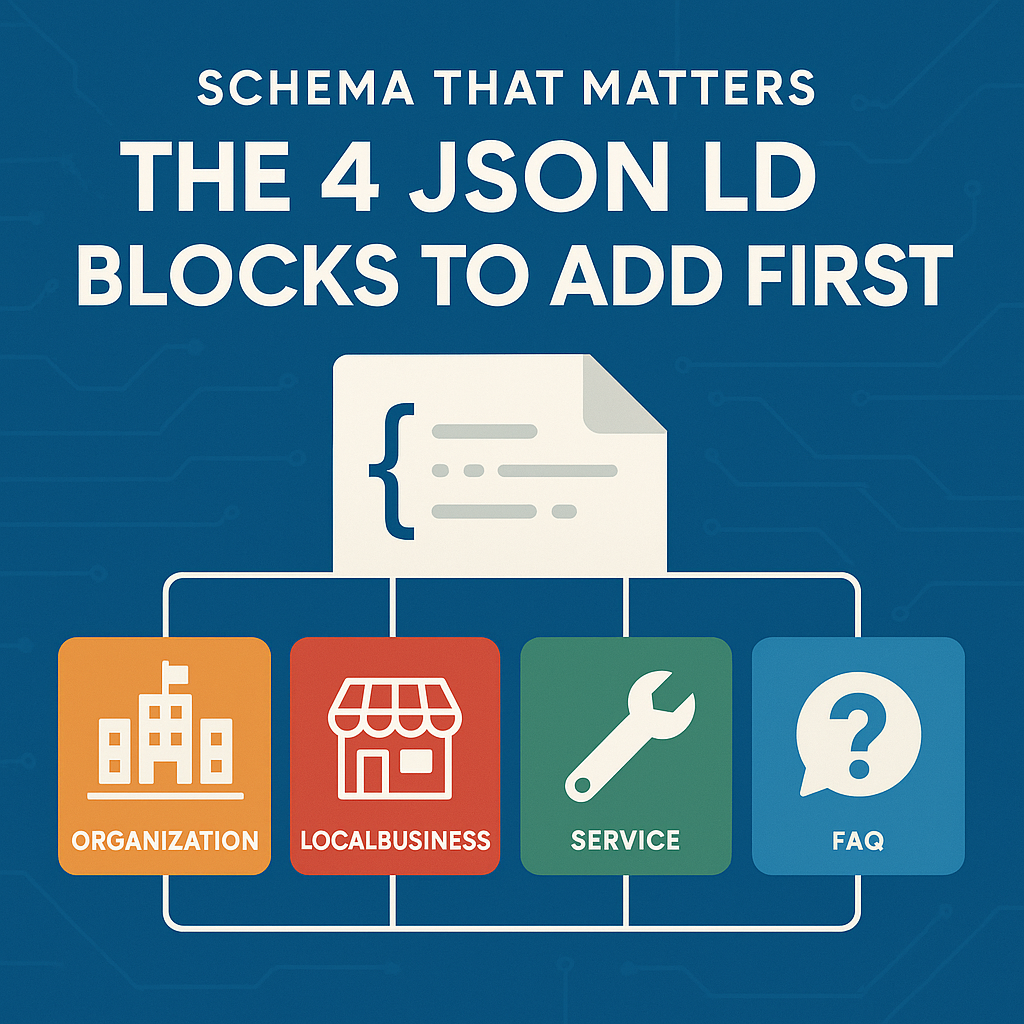
Search engines need clear information to understand who you are, what you do and why you matter. Schema markup gives them that clarity in a structured format. When used correctly, JSON LD turns your website into a mission ready asset that communicates with precision. At Tactical Boost Digital Marketing, we teach veteran owned businesses how to use schema the right way, without guesswork or clutter.
The truth is simple. You do not need every schema type on the internet. You need the right ones deployed in the right place. Below are the four JSON LD blocks every service business should add first if they want stronger rankings, richer search results and clearer authority signals.
1. Organization Schema
Organization schema gives search engines the most basic confirmation of your brand identity. This is your digital identification card. It tells Google who you are, where you are located and how customers can contact you. When this block is missing or inaccurate, search engines fill in the blanks on their own, which creates confusion.
Organization schema should include:
- Business name
- Address
- Phone number
- Logo
- Website URL
- Social profiles
For veteran owned businesses, this information also supports trust signals. A clean Organization block helps Google connect your brand across platforms and reduces mixed data that could weaken local rankings.
2. LocalBusiness Schema
If Organization schema is your ID, LocalBusiness schema is your mission profile. It tells Google your service area, business hours and what type of business you are. This is one of the most important blocks for any local service company because it strengthens local relevance.
LocalBusiness schema should include:
- Business category
- Service areas
- Hours of operation
- Accepted payment types
- Geo coordinates
- SameAs links for consistency across the web
When deployed properly, this schema helps connect your site with your Google Business Profile. It improves map visibility and increases the chance of earning rich results.
3. Service Schema
Service schema describes what you do. Not at a high level, but in a structured, clear format that Google can easily understand. This block tells search engines which services matter most and how those services relate to your business. Without it, your site may rank inconsistently or struggle to establish topical authority.
Each service page can include its own Service schema, but you can also use a master list on a core services page.
Service schema should include:
- Service name
- Description
- Provider
- URL of the service page
For service businesses, this block acts like a blueprint. It shows search engines the chain of command between your offerings, helping them index your pages with better accuracy.
4. FAQ Schema
FAQ schema enhances clarity and supports user intent. When added to a page with real questions and answers, it gives your content a chance to appear in rich results. This increases search visibility and often leads to a higher click through rate.
FAQ schema is especially effective on service pages, resource pages and educational content. It gives Google concise answers it can trust and reward.
FAQ schema works best when your questions:
- Address real customer objections
- Clarify confusing points
- Reinforce your service expertise
- Match search intent for your main keywords
At Tactical Boost Digital Marketing, we use FAQ schema as a precision tool. Not every page needs it, but the right pages benefit from it.
Why These Four Matter Most
There are dozens of schema types available. Most are optional. Some offer very little ranking impact. The four listed above function as your core system. They build the structure search engines rely on before you add more advanced markup later. Think of them as your foundation.
When these blocks are in place:
- Google understands your brand more quickly
- Local rankings become stronger
- Your services gain clearer indexing
- Your pages can qualify for rich results
- Your authority signals become more consistent
This is the level of clarity that moves your website from basic to strategic. You eliminate guesswork and give search engines a reliable data source that reinforces your expertise.
When to Add Advanced Schema
After your core structure is built, you can expand with additional blocks such as Review, Article, Product or HowTo schema. These add value, but only when they support real business goals. Tactical Boost teaches veteran owned companies how to deploy schema with purpose so every block serves a mission and nothing is added just for the sake of optics.
The goal is simple. Build clean data. Build strong authority. Build structured clarity that search engines can trust.
Ready to Strengthen Your Data Signals
If you want a digital presence built with precision and strategic markup,
Tactical Boost Digital Marketing is ready to help. We build structured data systems that improve clarity, reinforce trust and support long term ROI for veteran owned businesses. Reach out today and let us help you tighten your schema, strengthen your rankings and move your business forward with purpose.
Ready to work with Tactical Boost?
Let's connect! We’re here to help.
Send us a message and we’ll be in touch.
Or give us a call today at 725-240-0304
REQUEST A NO COST BRIEF:
More Marketing Tips, Tricks & Tools