
What Is Google Maps Optimization?
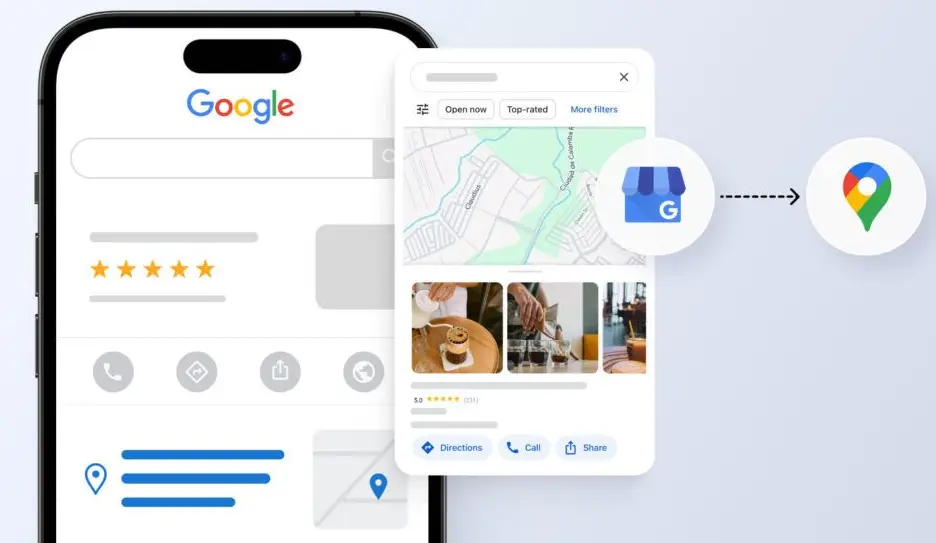
Google Maps optimization, also called Google Business Profile optimization, is the process of making your business show up and stand out in local searches. Your Google Business Profile is your battle station for local visibility. It shows up before your website, before most ads and before most of the competition, if it's done right.
When someone types "electrician near me," the top three businesses in the Map Pack get most of the clicks. It's more than filling out a profile. It's an ongoing operation with weekly actions, competitive awareness and steady proof that moves you up the Map Pack and keeps you there.
For service businesses, it's the difference between ringing phones and radio silence.
What Google Uses to Rank the Map
Google describes local results as driven by three things: relevance, distance and prominence.
- Relevance: how well your profile matches what the person searched. Categories, services and descriptions drive this.
- Distance: how far the searcher is from your business. You can't change where a searcher stands.
- Prominence: how well known and trusted you are. Reviews, links, mentions and activity all feed it.
You can't move your shop closer to every customer, but you can tighten relevance and build prominence. Every tactic below does one or the other. For the long version, read What Actually Moves the Map.
Phase 1: Completeness. Have You Filled In Every Field That Matters?
- Categories: pick the most specific primary category for your number one revenue service, then add only honest secondary categories.
- Services: list every service you actually sell. Each one is another chance to match a search.
- Service descriptions: write a short, benefit-first description for each service in plain customer language.
- Service areas: add the towns or ZIP codes you can schedule within a normal day. Skip statewide claims.
- Hours and contact: keep them accurate and identical across every platform.
- Business description: short, clear and natural, with what you do and where you do it.
- Attributes: tags like "veteran-owned" or "family operated" build trust fast when they're true.
Phase 2: Activity. Is Your Profile Showing Signs of Life?
- Posts: publish at least one post a week. Rotate offers, mini case studies, FAQs and before-and-after posts, each focused on one service. Need ideas? Steal from 15 Google Posts that drive calls.
- Photos: add real work photos every month: arrival, prep, work in progress, finish and crew. Spread uploads across the month. Stock photos are a trust leak.
- Products or services cards: build cards for your top services with a clear name, short bullets and a link to the matching page on your site.
- Responses: reply to every review. Always. Thank the customer, name the service and restate your standard.
Activity doesn't need to be flashy. It needs to be steady. A silent profile looks like a business on pause.
Phase 3: Reputation. Are You the Obvious Choice?
- Reviews: ask every happy customer within 24 hours, by text or email, with a direct link. Make it easy. Make it a habit. The full method is in Reviews as a Revenue System.
- Photo reviews: reviews with images boost trust and views. Invite customers to add one.
- Consistency: your name, address and phone (NAP) must match exactly across your site, your profile and every directory.
- Citations: directories like Yelp, Bing Places and the BBB should all reflect the same NAP. Fix duplicates, dead numbers and old addresses.
Phase 4: Defend Your Turf
Map Packs attract spam: keyword-stuffed business names, fake addresses, duplicate listings. Monitor your Map Pack, document clear violations and report them through Google's official channels. Report factually, then move on. The win comes from strong relevance and steady proof, not from arguments. Our guide to beating competitor spam without burning bridges lays out the evidence process.
Your First 30 Days
- Week 1: categories, services list, service areas and a full NAP audit.
- Week 2: build three to five service cards with links to matching pages, and upload five real photos.
- Week 3: schedule four weekly posts, add tracking parameters to every link, and launch your review asks.
- Week 4: reply to every review, add five more photos, spot-check citations and document any spam.
Hold a 20-minute weekly huddle: what shipped, what's blocked, what's next. Small consistent actions beat large random bursts. The full sprint is in Control the Map.
Your Profile Feeds AI Answers, Too
Your Business Profile isn't just for the map anymore. When buyers ask AI tools for local recommendations, the details in your profile, your reviews and your listings across the web all help confirm who you are and what you do. A complete, active, consistent profile with specific reviews is one of the strongest supporting signals for generative engine optimization.
How to Measure Map Progress
- Profile actions: watch calls, direction requests and website clicks in your Business Profile performance report. Compare month over month.
- Traffic: track visits to the service pages your cards and posts link to, using tracking parameters so GA4 can attribute them.
- Lead quality: tag calls and forms by source and service. You want calls that match your best work, not just more calls.
- Cadence: use a checklist to confirm weekly actions shipped on time. What gets shipped gets measured.