
What an SEO Website Actually Does
An SEO website for a service business has one job: turn the people who find you into people who call you. Search engines rank structured, fast-loading sites with strong content and schema. Humans convert on clean, simple layouts with a clear path to action. A good build serves both.
Design agencies often skip the most effective parts of site design because they live on the back end, unseen. Technical SEO, schema markup and on-page strategy are essential to your visibility in your market. The foundation of your website determines how Google places you and how customers view you. Don't let a cheap site cost you thousands in lost opportunity.
Structure: Build It to Perform, Not Just Look Pretty
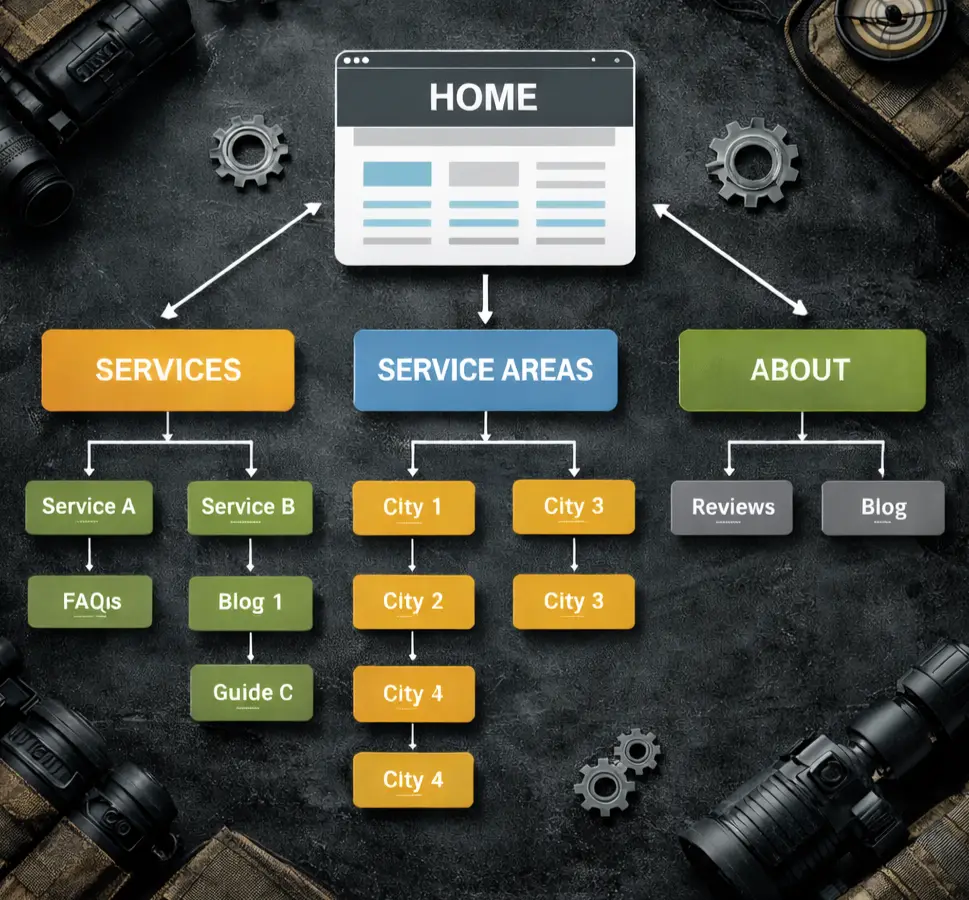
- Homepage hierarchy: a clear intro, a service overview, trust signals and a call to action above the fold.
- Dedicated service pages: each main service, like furnace repair or AC installation, gets its own optimized page with one clear job.
- Location pages: only for the towns you truly serve, each with real local proof. See city pages that drive real leads.
- Contact page: a clickable phone number, your service area, a simple form if you use one, and a map.
- Navigation: keep it simple. No dropdown labyrinths.
- Mobile-first design: most service searches happen on a phone. Make sure it looks sharp and loads fast there first.
The full blueprint is in Built to Rank: Smart Website Architecture.
Content: Say the Right Things, the Right Way
- Headline clarity: make it instantly clear what you do and where you do it.
- Local relevance: mention your city, service area or neighborhoods naturally throughout the site.
- Real photos: show your team, your work, your vehicles and your process. Avoid generic stock where you can.
- Social proof: put reviews, testimonials and affiliations directly on the homepage and service pages.
- Calls to action: every page should invite the next step: call, book or send a request. Say exactly what happens when they click.
For the page-level formula, read Turn Clicks Into Calls.
Technical Foundation: Easy for Google and Customers to Use
- Speed and hosting: use a fast, reliable host, compress images and avoid bloated themes and page builders.
- HTTPS and security: always use SSL. Browsers warn people away from unsecured sites.
- On-page SEO: keyword-aligned title tags, meta descriptions, one H1 per page, logical H2 and H3 headings and descriptive alt text.
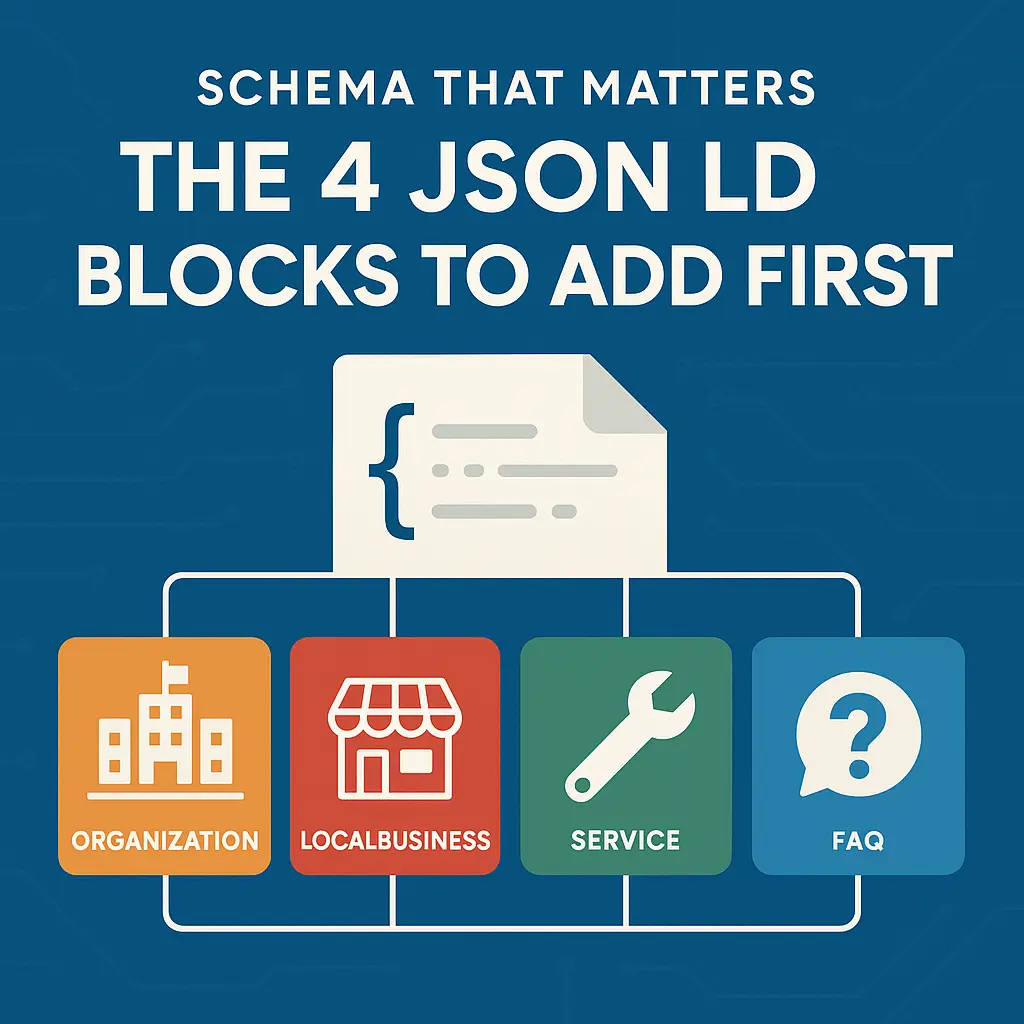
- Schema markup: structured data for your organization, local business, services, FAQs and articles.
- Clean URLs: short, readable and keyword-aligned, like
/ac-installation-las-vegas/. - Crawlability: an XML sitemap, a sensible robots.txt and no broken links.
- Accessibility: readable contrast, keyboard-friendly navigation and labeled forms. It helps every visitor and every machine reading the page.
Speed has its own scorecard. Our plain-English guide to Core Web Vitals explains LCP, INP and CLS without the jargon.
Conversion-Focused Design
A service business site isn't a library. It should help people decide, then make acting easy.
- Clear calls to action throughout the page, not just at the bottom.
- Click-to-call buttons and tap targets sized for thumbs.
- Contact options placed where people make the decision.
- Trust signals like reviews, licenses and affiliations near every call to action.
Structured for Scale
Your site should grow with your business, not hold it back. Build it with a logical architecture, easy-to-edit content areas, room for new service areas, and space for a blog, landing pages and future integrations. When you add a service or a town, it should slot into the existing structure instead of forcing a redesign.
Built for AI Search From Day One
The same structure that ranks also gets quoted. A site where every page has one clear purpose, the answer comes first and the proof is visible is exactly what AI tools look for when they assemble an answer. Build page intent into the site map before the first page is designed. Our GEO field guide explains why.
Pre-Launch Checklist
- Every core service has its own page, linked from the homepage.
- Each page has a unique title, meta description and one H1.
- The phone number is clickable on every page.
- Images are compressed and sized, with descriptive alt text.
- Schema validates in Google's Rich Results Test.
- Search Console and Bing Webmaster Tools are verified and the sitemap is submitted.
- Analytics tracks calls and form submissions as conversions.
- Old URLs redirect to their new homes with permanent (301) redirects.